
Many travellers arrive in Istanbul expecting a city of kebabs and grilled meat, and vegetarian visitors often worry they will end up living on bread and salad. The truth is the opposite. Anatolian cooking has always been built on vegetables, grains, legumes, yogurt, olive oil and herbs, and a large part of any traditional Turkish table is vegetarian without even trying to be. At Shyra Restaurant in Sultanahmet, a short walk from Hagia Sophia and the Binbirdirek Cistern, the menu has a dedicated vegetarian section as well as many vegetarian mezes, salads and oven dishes. This guide shows vegetarian guests how to build a full, generous dinner from the Shyra menu, and which questions are worth asking along the way.
Why Anatolian Cuisine Is Friendlier to Vegetarians Than You Think
For most of history, meat was a luxury in Anatolian villages. It was eaten at weddings, religious festivals and special gatherings, while everyday meals were made from what the land gave: wheat and bulgur, lentils and chickpeas, eggplants, peppers, tomatoes, greens from the field, and dairy from the family’s animals. Out of that necessity grew one of the richest vegetable traditions in the world. The Ottoman kitchen added another layer, the zeytinyağlılar, vegetables slowly cooked in olive oil and served at room temperature, which are still a pillar of Turkish home cooking.
That history is why a Turkish meze table feels so natural to vegetarians. Many of the dishes that come first, the dips, the stuffed vine leaves, the roasted peppers and eggplants, were never meant to be side dishes; they were the meal. If you want to understand how these village and palace traditions differ, our article on the difference between Anatolian and Ottoman cuisine is a good companion to this guide.
A vegetarian dinner at Shyra therefore does not feel like a list of exceptions. It follows exactly the same rhythm as any Turkish meal: cold starters, something warm, a main course, a sweet ending and a cup of tea or coffee.
Cold Starters: Where a Vegetarian Dinner Begins
The cold starter section of the Shyra menu is the best place to begin, and most of it is meat-free. A few highlights for vegetarian guests:
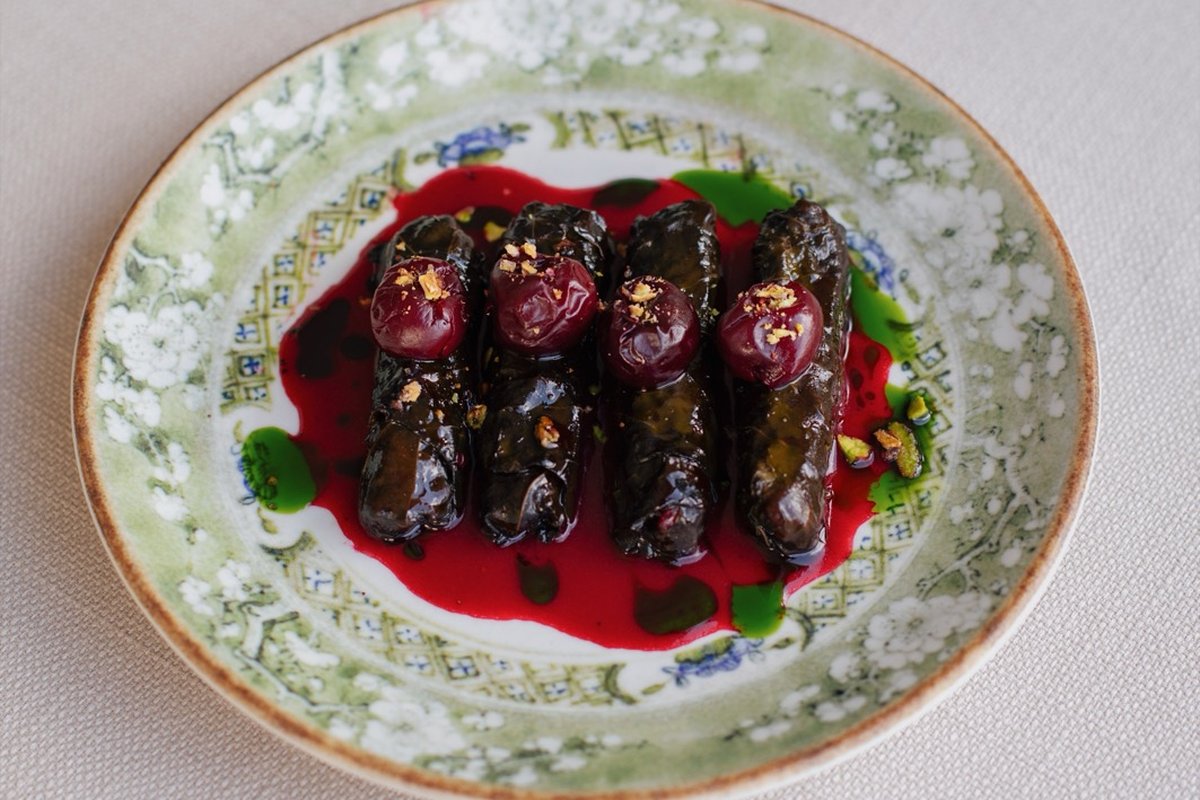
- Cherry Stuffed Grape Leaves (Tokat): olive oil-based vine leaves filled with aromatic rice, sour cherries, currants and pine nuts. The sour cherries give the classic dolma a sweet-tart twist typical of the Tokat region.
- Muhammara (Gaziantep): a rich dip of red peppers, walnuts, bread, pepper paste, garlic and cumin, with a gentle warmth rather than real heat.
- Mestave (Eastern Anatolia): chard folded into strained yogurt and finished with black cumin, fresh and slightly tangy.
- Smoked Eggplant Mezze (Anatolia): roasted eggplant and colourful peppers with yogurt, tahini and labneh cheese, smoky and creamy at the same time.
- Sour Pepper Paste (Anatolia): roasted red and green village peppers with pomegranate, garlic and apple, a bright, tangy meze that wakes up the palate.
- Mixed Homemade Pickles: seasonal pickles of unripe grapes, cucumbers, carrots, melon and cabbage. Pickling is one of the oldest preservation techniques in Anatolia, and a bowl of pickles is a classic opener.
For two people, three or four of these mezes with bread make a satisfying first course. Our guide to Turkish cuisine beyond kebabs explains the meze tradition in more detail, including how to order and share.
Piruhi: Ottoman-Style Dumplings from Tunceli
The star of the vegetarian section is piruhi, a dish from Tunceli in Eastern Anatolia that most visitors have never heard of. Piruhi are hand-made dumplings filled with spinach and local tulum cheese, served over yogurt with walnuts and a drizzle of red butter. They look similar to mantı, the famous Turkish dumplings, but they are softer, greener and completely meat-free, and the walnut and cheese give them a deep, nutty flavour.
Dumplings travelled to Anatolia with the Turkic peoples of Central Asia, and every region adapted them to what it had. In the mountains of Tunceli, where greens and cheese were more common than meat, piruhi was the natural answer. If you want to taste how a single idea can change across a whole country, order piruhi and compare it with the beef-filled mantı on the hot appetizer menu if someone at your table eats meat. Our article on the great migration behind Turkish cuisine tells the story of how dishes like these crossed Asia.
İmam Bayıldı: Stuffed Eggplant from Hatay
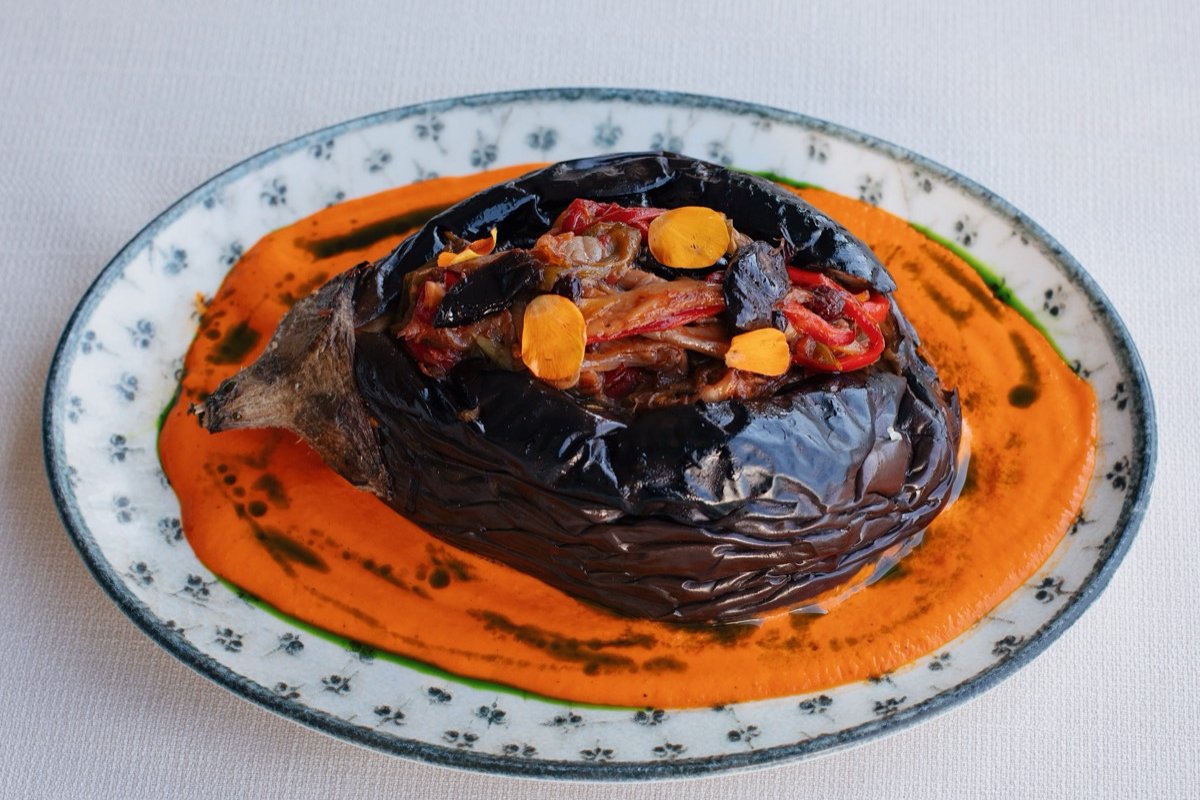
Eggplant is the queen of Turkish vegetables, and legend says Ottoman cooks knew more than a hundred ways to prepare it. Shyra’s vegetarian stuffed eggplant, known in Turkish as imam bayıldı (“the imam fainted”), is prepared here in the style of Hatay, a city on the eastern Mediterranean famous for its layered, spice-rich cooking. The whole eggplant is fried until silky, then filled with peppers, garlic and onions cooked with a grape juice mixture that adds a subtle, fruity sweetness. It is served on a vivid orange sauce, so every forkful combines smoky, sweet and tangy flavours.
This is a main course in its own right, rich enough to replace a meat dish. It pairs particularly well with one of the fresh salads, which balance the softness of the eggplant with crunch and acidity.
Mixed Grilled Vegetables and Herb Pide
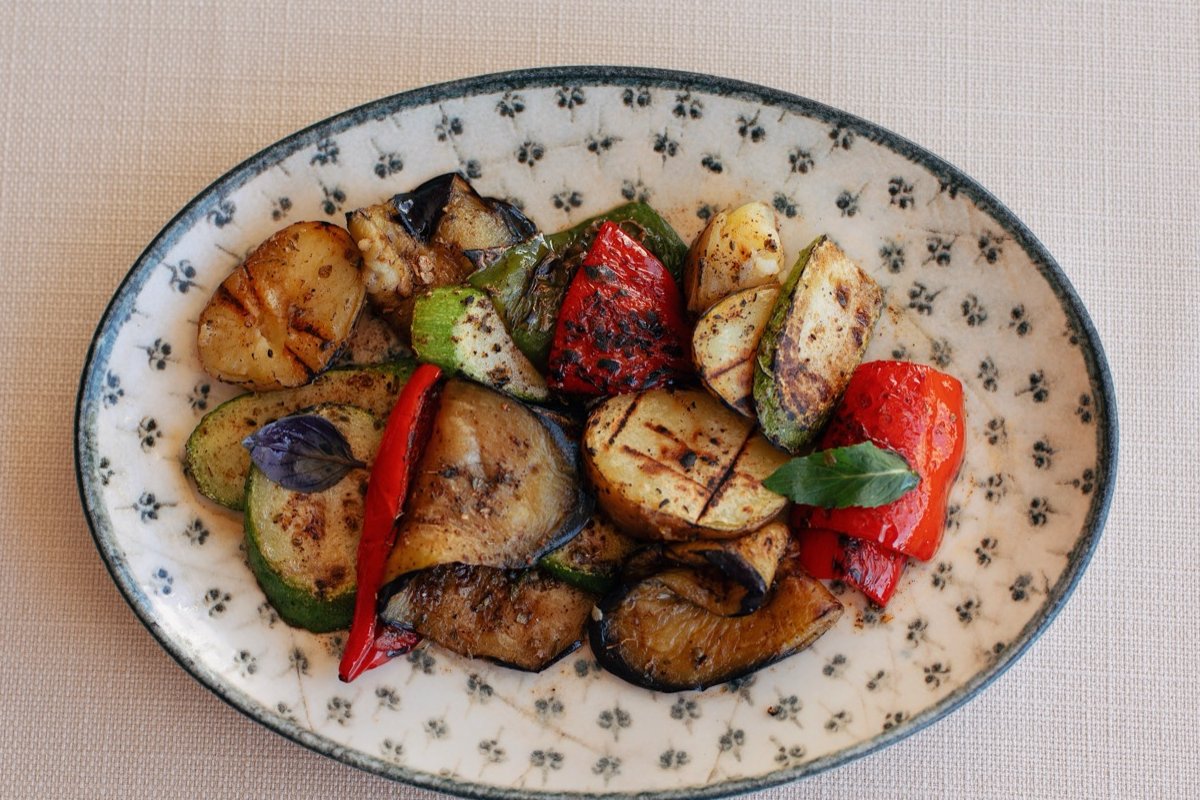
If you prefer something simpler, the mixed grilled vegetables bring seasonal produce straight from the charcoal: eggplant, zucchini, peppers and potatoes with grill marks and a little olive oil. It is a light, clean plate and a good partner for richer mezes.
From the oven section, the herb pide is a vegetarian flatbread from the Black Sea and Aegean traditions, topped with seasonal herbs and regional cheese and baked until the edges are crisp. Pide is the Turkish answer to pizza, but older and boat-shaped, and it is meant to be torn and shared at the table. One herb pide between two people is plenty alongside mezes.
Salads That Work as a Meal
Turkish salads are not an afterthought, and several on the Shyra menu are substantial enough to be a light main course:
- Izmir Tulum Cheese Avocado Lettuce Salad: Yedikule lettuce, a heritage variety from Istanbul, with avocado, crumbled Izmir tulum cheese and roasted slivered almonds.
- Tomato Salad with Blackberry: colourful seasonal tomatoes with blackberry paste, lemon, basil and olive oil.
- Tabbouleh Salad from Mersin: parsley, mint, spring onions and fine bulgur with lemon and Adana turnip.
- Bostana Salad from Urfa: finely chopped seasonal vegetables in a tangy dressing, the classic partner of south-eastern dishes.
Warm Plates and a Sweet Ending
Among the hot appetizers, the sailor’s pastry with honey is a crisp pastry filled with regional Turkish cheeses and served with honey, a recipe that goes back to the 15th century. The crispy potatoes with cheese sauce are an easy favourite for younger guests. Both are vegetarian and both are made for sharing.
For dessert, vegetarian guests can choose from katmer (crispy pastry with clotted cream and pistachios), baklava, levzine (an Ottoman almond and pistachio sweet), warm semolina halva with melted cheese, or ice cream. One dessert to be careful with is the chestnut kazandibi: like many classic Ottoman milk puddings it is traditionally made with shredded chicken breast, so it is not vegetarian. We explain this surprising tradition in our guide to Turkish dessert beyond baklava.
What to Tell Your Server
Turkish cooking uses stocks, butter and yogurt generously, so a few dishes that look vegetarian are not. To make your dinner easy, keep these points in mind and mention your diet when you order:
- Pilafs: the palace-style “iç pilav” is cooked in chicken broth and the chickpea and firik pilaf in bone broth, so neither is vegetarian.
- Soups: traditional soups are usually made with meat or chicken stock; ask before ordering.
- Kazandibi: contains chicken, as explained above.
- Vegan guests: many vegetarian dishes contain yogurt, cheese, butter or honey. Let the team know and they can point you to olive oil-based mezes, salads and grilled vegetables.
- Tasting menu: the set tasting menu includes meat and fish courses; vegetarian guests will usually be happier ordering à la carte.
When in doubt, simply ask. Turkish hospitality takes pride in looking after guests, and the kitchen is used to questions about ingredients.
Frequently Asked Questions
Is Shyra Restaurant a good choice for vegetarians in Sultanahmet?
Yes. The menu has a dedicated vegetarian section (piruhi, imam bayıldı stuffed eggplant, mixed grilled vegetables) plus many vegetarian cold starters, salads, the herb pide and several desserts.
What is the most traditional vegetarian dish on the menu?
Piruhi from Tunceli and the cherry stuffed grape leaves from Tokat are both regional recipes you rarely find in Istanbul restaurants.
Can vegans eat at Shyra?
Yes, with some care. Several mezes, salads and the grilled vegetables can work for a vegan diet; tell your server so they can confirm which dishes contain dairy or honey.
Do I need to book a table?
Evenings in Sultanahmet are busy, so booking is recommended. You can reserve on our reservation page.
A Table Where Vegetables Lead
A vegetarian dinner in Istanbul does not have to be a compromise. Anatolia’s oldest recipes were built around vegetables, grains and dairy long before vegetarianism had a name, and at Shyra they sit side by side with the palace and grill dishes on the same menu. Start with a spread of mezes, choose piruhi or the imam bayıldı from Hatay as your main course, add a salad and a herb pide, and finish with katmer and Turkish coffee. It is a full Turkish feast, and not a single plate of it is missing anything. If this is your first Turkish meal, our guide on what to order the first time you try Turkish food will help you plan the rest of your stay.