
Turkish dessert has a reputation problem abroad. Outside Turkiye the word usually means baklava, and baklava alone, drowned in syrup. Inside the country the picture is completely different: the dessert course is a wide, carefully divided territory in which syrup pastries are only one province. Milk desserts sit in another. Halva made with semolina or flour sits in a third. Almond and pistachio pastes, a speciality of the Ottoman palace kitchen, sit in a fourth that most visitors never even hear about. This guide walks through four of them, all served at Shyra Restaurant in Sultanahmet, and explains what each one is actually trying to do.
The Four Families of the Turkish Dessert Table
It helps to know the map before ordering. Traditional Turkish dessert divides roughly into four families. The first is the syrup family: baklava, kadayif, sekerpare, everything soaked after baking. The second is the milk family: muhallebi, kazandibi, sutlac, tavuk gogsu, thickened with rice flour or starch and usually served cold. The third is the halva family, made by cooking flour or semolina in butter until it toasts. The fourth is the paste and marzipan family built on ground almonds and pistachios, the most courtly and the least known.
These families are not interchangeable, and a good dessert order respects the meal that came before it. After a rich, slow cooked main course, a cold milk dessert resets the palate. After a lighter meal, a warm halva or a syrup pastry has room to work. Ottoman table etiquette took this sequencing seriously, and it is one of the reasons a tasting menu ends where it does rather than simply offering everything at once.
If you are still deciding what to eat before you get to the dessert course, our guide to ordering on a first visit to a Turkish restaurant covers the earlier courses.
Chestnut Kazandibi: The Burnt Bottom of the Pot
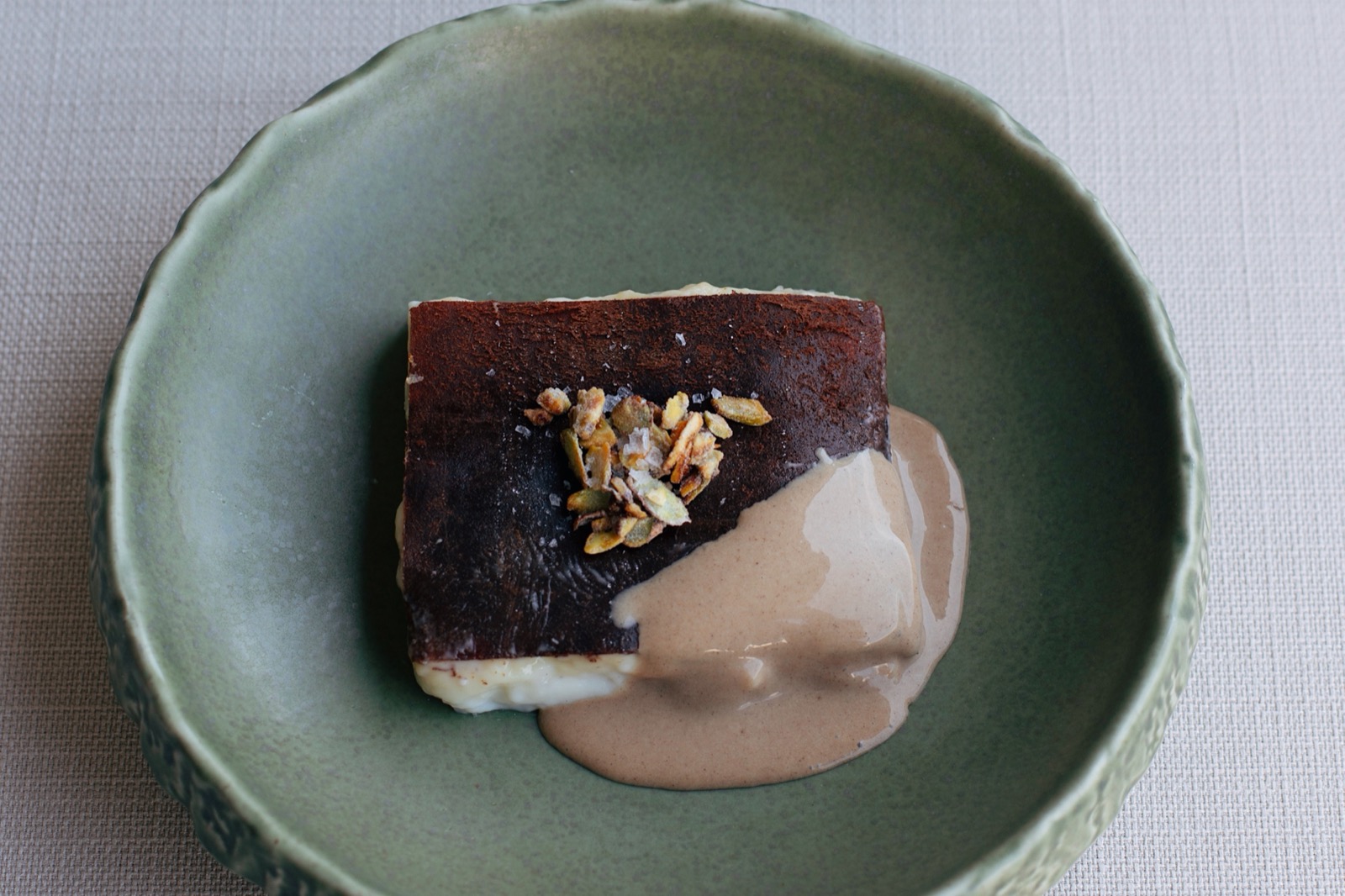
Kazandibi means, quite literally, the bottom of the cauldron, and the name is the recipe. A thick milk pudding is set in a wide pan and the base is deliberately caramelised until it is almost burnt, then the whole slab is rolled or cut so that the dark, slightly bitter layer sits against the pale, silky one. It is one of the very few desserts in world cooking whose defining feature is controlled scorching.
The dish belongs to Ottoman palace cuisine and its ancestor, tavuk gogsu, was traditionally made with finely shredded chicken breast pounded into fibres so fine that they disappear into the milk and leave only texture behind. That sounds alarming to a modern guest and is in fact one of the great technical achievements of the palace kitchen: protein used as a thickener two centuries before anyone wrote down why it works.
The version on our menu is finished with chestnut, a Bursa tradition, which adds a soft earthy sweetness to the caramel. Served cold and firm, it is the dessert we recommend after the goose kebab or any of the slow cooked main courses, because the temperature contrast does most of the work.
Levzine: The Palace Almond Dessert Nobody Orders
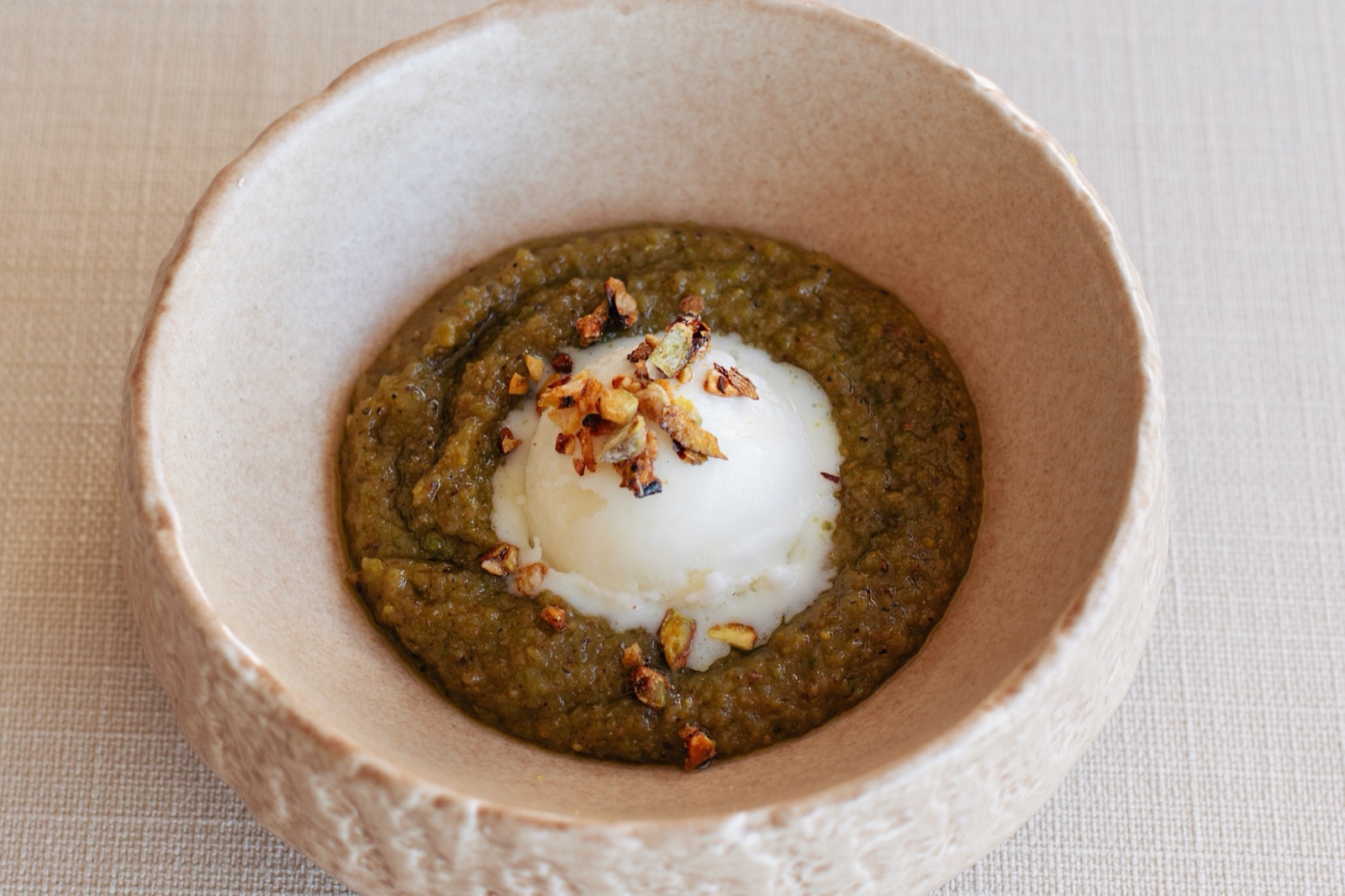
Levzine takes its name from lawz, the Arabic word for almond, and it is the dessert on this list you are least likely to have met. Ground almonds and pistachios are cooked into a dense, fragrant paste, sweetened lightly and served in a small portion with cream. There is no syrup, no pastry and no dairy thickener. It is nuts, sugar and patience.
This dessert sat high in the palace hierarchy precisely because it was expensive and slow. Almonds had to be blanched, skinned and ground by hand; pistachios came from Antep at real cost; and the paste had to be worked long enough to turn glossy without splitting. Confectioners in the imperial kitchen produced sweets like this for the sultan personally rather than for the general household, and recipes of this family survive in Ottoman sweet books alongside the better known marzipan style preparations.
Taste wise, levzine is the least sugary dessert on our menu and by some distance the most aromatic. If you generally find Turkish dessert too sweet, this is the one to order. It also pairs unusually well with Turkish coffee, since the bitterness of the coffee reads as a seasoning rather than a contrast.
Cheese Semolina Halva: A Warm Dessert Eaten with a Spoon
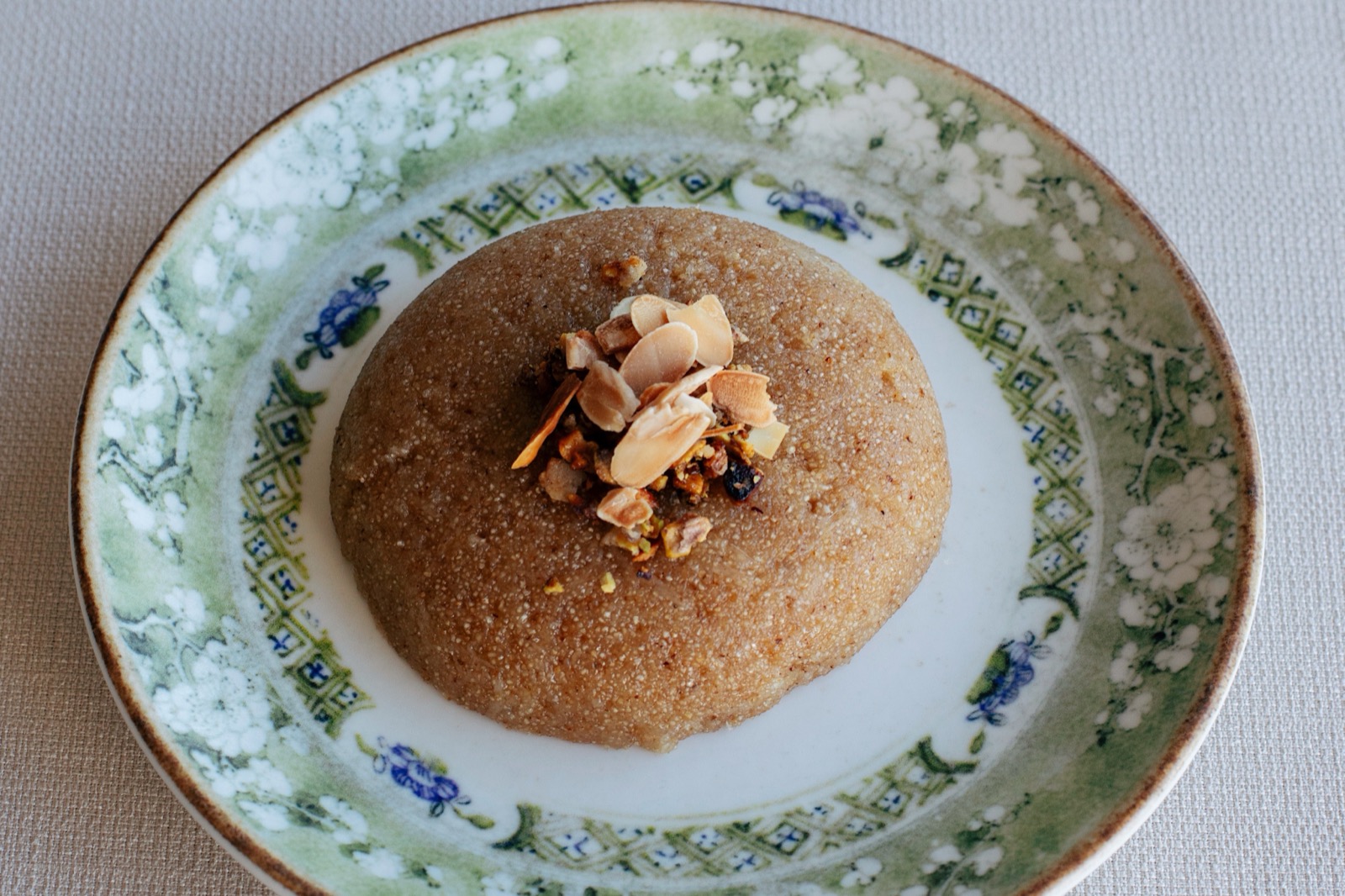
Halva is the oldest dessert family in this article and the one most tied to ritual. Semolina is toasted in butter until it smells of biscuit, then milk and sugar are added and the mixture is cooked and rested until it holds its shape. Across Anatolia this dish is made for celebrations, for guests and, in many regions, for funerals; the smell of semolina toasting is a social signal before it is a flavour.
Our version, from the Balikesir and Tekirdag tradition, adds unsalted white cheese that melts into the hot semolina and gives it a gentle pull when you lift the spoon. The cheese does not read as savoury. It reads as richness, in the same way that a good bread pudding does. Warm, moderately sweet and topped with roasted nuts, it is the most comforting dessert we serve and the natural choice on a cold Sultanahmet evening.
Halva also illustrates something we keep coming back to in why every dish at Shyra tells a story: a dessert can carry social meaning long after its recipe stops changing.
Pistachio Katmer: Pastry Made to Order
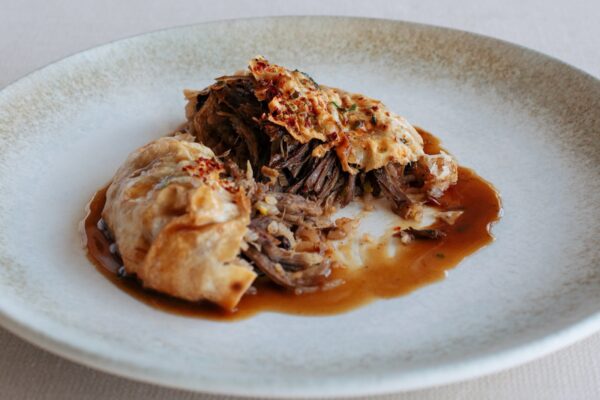
Katmer is a Gaziantep speciality and the only dessert here that must be made and eaten in the same short window. Paper thin dough is stretched until it is nearly transparent, spread with clotted cream and green Antep pistachios, folded into a square or a roll and baked briefly at high heat. The outside shatters, the inside stays cool and creamy, and the pistachio is raw rather than toasted so its colour and perfume survive.
In Gaziantep katmer is traditionally a breakfast dish, eaten early and often on a celebration morning, which tells you how differently the Turkish table draws the line between sweet and savoury. On a restaurant menu it functions as dessert, but it retains that morning lightness: there is no syrup on it at all, and the sweetness comes almost entirely from the cream and the pistachio.
Because it depends on timing, katmer is the dessert we most often suggest ordering at the same time as the main course rather than waiting until the table is cleared.
What About Baklava?
Baklava is on our menu, made in the classic Ottoman way with thin layers of pastry, pistachios or walnuts and butter syrup, and there is no reason to avoid it. The point of this guide is not that baklava is overrated but that ordering it by reflex means missing three or four other dessert traditions that are just as old and considerably rarer outside Turkiye.
A practical suggestion for a table of four: order one baklava, one kazandibi and one levzine, and share. The contrast between a syrup dessert, a cold milk dessert and an almond paste tells you more about the Turkish dessert repertoire in ten minutes than any single plate can.
Where Dessert Sits in an Ottoman Meal
In palace practice, dessert was not an afterthought bolted onto the end of dinner. Sweet dishes appeared between savoury courses as palate resets, and the closing sweet was chosen against everything that came before it. The residue of that logic is still visible in our evening degustation menu, which moves from sherbet through soup, meze and a palace main course before finishing with kazandibi and Turkish coffee.
Turkish coffee at the end is not decorative either. It arrived in Istanbul in the sixteenth century and the city developed the brewing method that carries its name; serving it after a sweet dessert is a deliberate bitter close. You can read more about how that whole sequence came together in the great migration behind Turkish cuisine, and about the three sixteenth century main courses that precede dessert in our piece on Ottoman palace cuisine in Sultanahmet.
Frequently Asked Questions About Turkish Dessert
Is every Turkish dessert very sweet? No. Milk desserts and almond pastes are considerably less sweet than syrup pastries. Levzine in particular is mild.
Is there really chicken in kazandibi? In the classical tavuk gogsu version, yes, as a thickener. Our chestnut kazandibi is on the menu as a milk dessert and you should ask the kitchen if this matters to you.
Which dessert is best for someone who does not like syrup? Levzine first, then cheese semolina halva, then katmer. All three are syrup free.
Can dessert be ordered without a full meal? Yes, with Turkish coffee, and it is a perfectly normal afternoon in this neighbourhood.
Are there vegetarian and nut free options? Kazandibi and semolina halva contain no meat in our preparation and the halva can be served without nuts on request.
Finishing a Meal in Sultanahmet
A dessert course is where a restaurant either takes its tradition seriously or reaches for the easy option. Chestnut kazandibi, levzine, cheese semolina halva and pistachio katmer are four different answers to the same question, drawn from four different corners of Anatolian and Ottoman practice, and each of them was designed to close a meal in a particular way.
If you would like to work through them properly, book a table at Shyra Restaurant and leave room. The dessert course here is not an afterthought, and you can read the wider story of the restaurant in everything you want to know about Shyra.