
Ask ten visitors what they want to eat in Istanbul and at least eight will say kebab. The word travels well, but it hides an enormous range of dishes: hand-chopped meat pressed onto a flat iron skewer, slices of tenderloin threaded between onions, chops seared over charcoal, even a slow-simmered beef stew served on smoked eggplant. At Shyra Restaurant, a few steps from the Binbirdirek Cistern in Sultanahmet, the grilled kebab section of the menu is short on purpose. Every kebab on it has a hometown, a technique and a reason to be there. This guide walks you through each one, explains what makes it different, and tells you how to build a good kebab dinner around it.
What Turns Grilled Meat into a Kebab?
The oldest version of the kebab is simply meat cooked over an open fire, and that idea is as old as the nomadic Turkic tribes who crossed the Central Asian steppe with their herds. Meat had to be cooked quickly, with little fuel, and often on the move; cutting it into small pieces and threading it onto a blade or a stick was the most practical answer. When those tribes settled in Anatolia, the habit came with them, and over the centuries every region turned it into something of its own. If you want the longer story of that journey, our article on the great migration behind Turkish cuisine traces it from the steppe to the Bosphorus.
By the Ottoman period, kebab making had become a profession with its own guild. Istanbul had kebab masters who did nothing else, and the palace kitchens at Topkapı employed cooks whose only job was roasting meat. What separated a great kebab from an ordinary one was never a secret sauce. It was the cut of meat, the ratio of fat, the way the meat was chopped, and above all the control of the fire. That is still true today. A kebab cooked over real charcoal gets a crust and a smoky depth that a gas grill cannot imitate, and the cook has to read the heat constantly, raising and lowering the skewers as the coals settle.
The Turkish kebab family is usually divided into skewered kebabs (şiş), minced-meat kebabs pressed onto a wide skewer, and dishes that are called kebab because they belong to the same kitchen even though they are stewed or baked. Shyra’s menu has a little of each, which makes it a good place to understand the whole family in one dinner.
Adana or Urfa Kebab: One Skewer, Two Temperaments
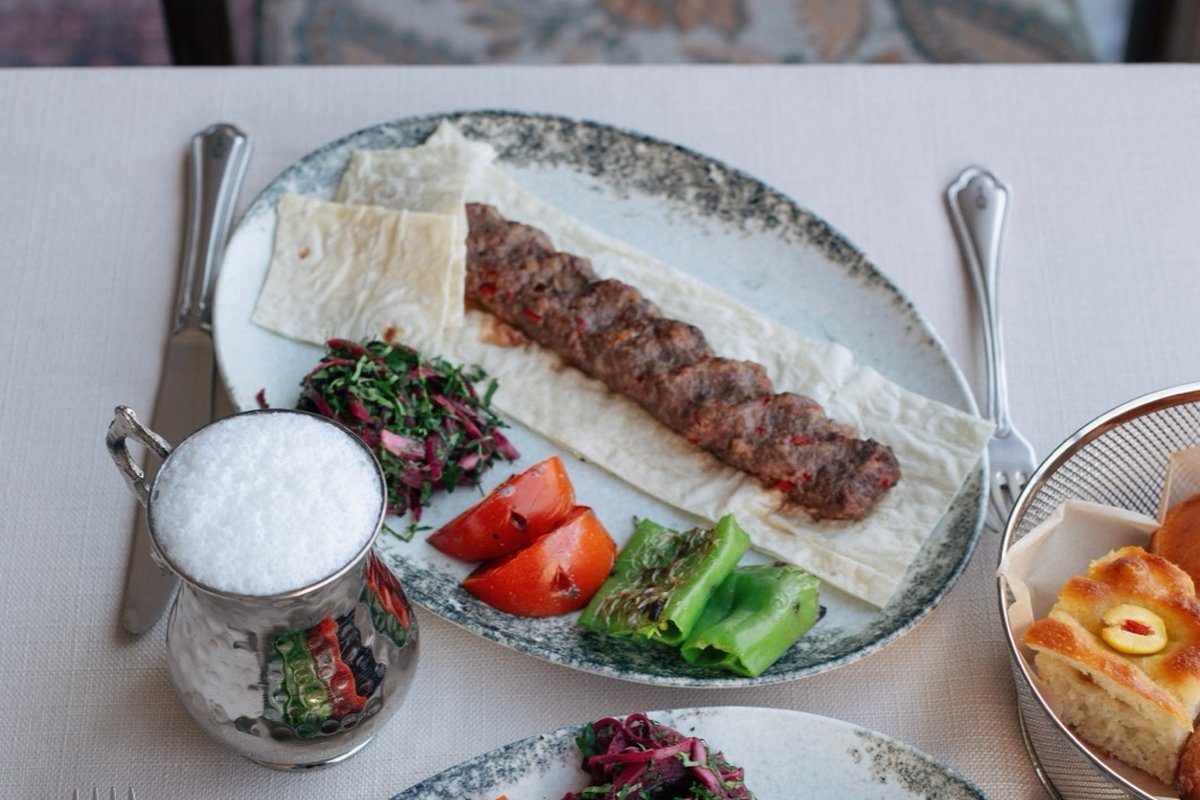
The most famous minced kebab in Türkiye comes from two neighbouring cities in the south-east, and at Shyra you choose between them when you order. Both start the same way: lamb and beef are chopped by hand with a long, curved knife rather than pushed through a grinder, traditionally kneaded with a little tail fat and pressed by hand onto a wide, flat iron skewer. Hand chopping matters. A grinder crushes the meat and squeezes out its juices, while the knife leaves small, distinct pieces that hold moisture and give the kebab its loose, juicy texture.
The difference is the heat. Adana kebab is seasoned with red pepper flakes and has a gentle but noticeable spice. Urfa kebab uses the same base without the hot pepper, so the flavour of the meat and the smoke comes through more cleanly. If you are not sure which to pick, a simple rule works well: choose Adana if you like a little fire, choose Urfa if you want to taste the meat first. Adana kebab is so closely tied to its city that its traditional recipe is protected as a registered geographical indication in Türkiye.
At Shyra the kebab is cooked over charcoal and served the classic way, on thin flatbread that soaks up the juices, with grilled green peppers, tomato and a sharp red onion and herb salad. Eat a bite of kebab with a bite of the bread underneath it; that bread is not decoration, it is half of the dish.
Pistachio Kebab: Gaziantep on a Skewer
Gaziantep is the pistachio capital of Türkiye, and the city puts its most famous crop into almost everything, from baklava and katmer to kebab. Pistachio kebab follows the same hand-chopped method as Adana, but green pistachios are worked into the meat and scattered over the top before grilling. The nuts toast slightly over the coals, adding a sweet, buttery crunch that balances the richness of the lamb.
This is the kebab to order if you have already tried Adana somewhere else and want something you will not find on every corner. It also pairs well with the dessert course: if you are planning to finish with katmer or baklava, both from the same city, you get a small tour of Gaziantep in one meal. Our guide to Turkish dessert beyond baklava explains those sweets in detail.
Shashlik Kebab: Tenderloin Between the Coals
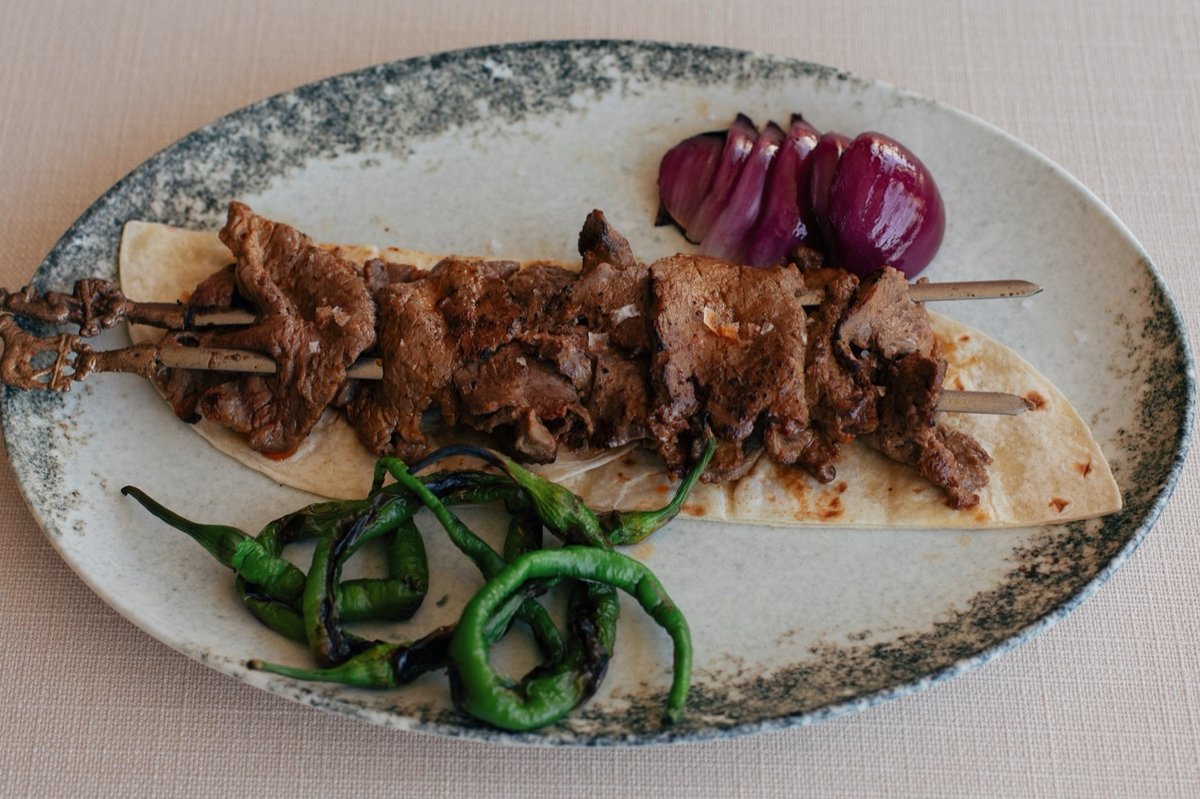
Not every kebab is minced. The shashlik kebab at Shyra is made from thin slices of beef tenderloin threaded onto the skewer and grilled quickly over high heat, so the outside chars while the inside stays tender. It arrives on flatbread with grilled long green peppers and red onion pickles, whose acidity cuts through the meat.
The word shashlik itself has travelled a long way. It is used across the Caucasus, Central Asia and Eastern Europe for skewered meat, and its roots go back to the Turkic word for skewer, şiş. In other words, the dish is a cousin of the şiş kebab that every Turkish kitchen knows, cooked here with a premium cut. For guests who find minced kebab too rich or too spicy, shashlik is usually the most comfortable choice on the grill menu.
Lamb Chops from Thrace
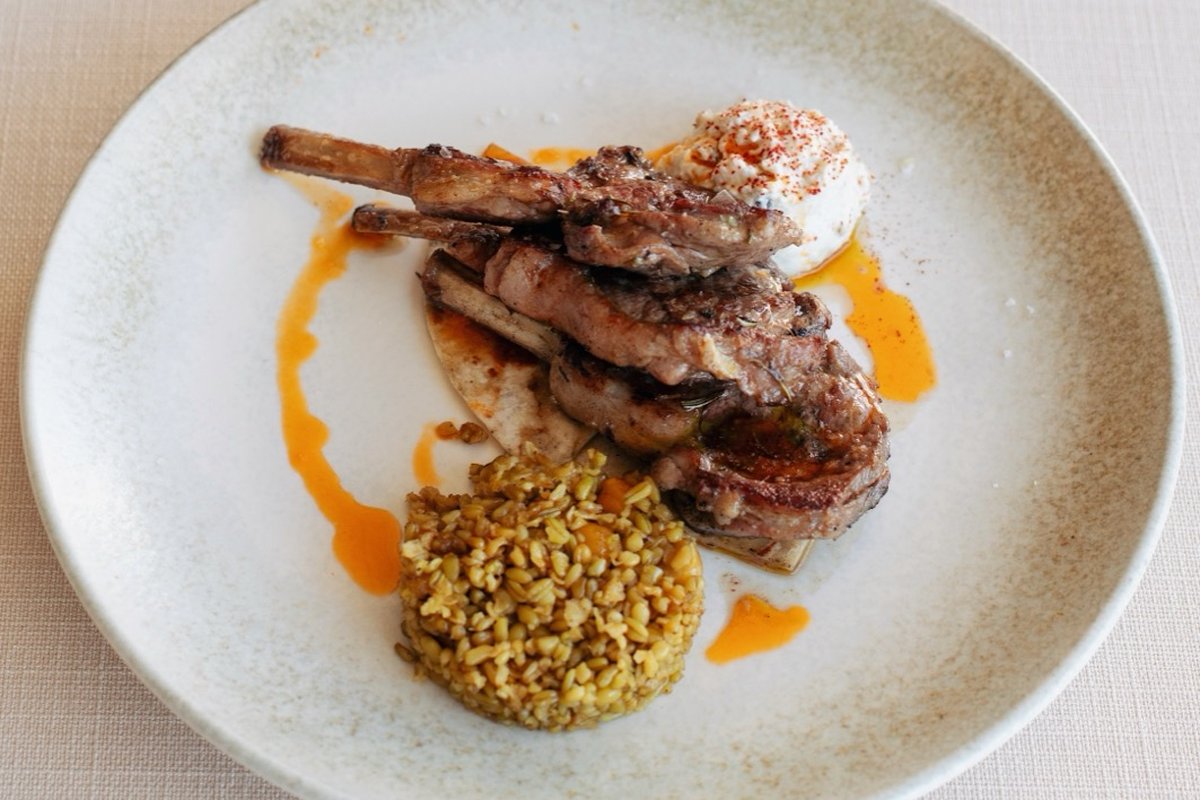
Thrace, the European corner of Türkiye west of Istanbul, is known for the kıvırcık, a curly-fleeced sheep breed whose lamb is prized for its fine texture and mild taste. Shyra’s lamb chops are cut from Thracian curly lamb and grilled over charcoal, which renders the thin layer of fat along the bone and turns it crisp. Good lamb chops need very little seasoning; salt, a little pepper and the smoke of the grill do most of the work.
This is the most generous plate in the kebab section and a good choice if you want a single main course rather than several shared plates. Eat the chops with your hands if you like; nobody in Türkiye will think less of you for picking up the bone. The menu’s grains are a natural companion here, especially a bulgur-based pilaf, which absorbs the juices on the plate.
Hünkar Beğendi and Butcher’s Meatballs: Ottoman Plates from the Same Fire
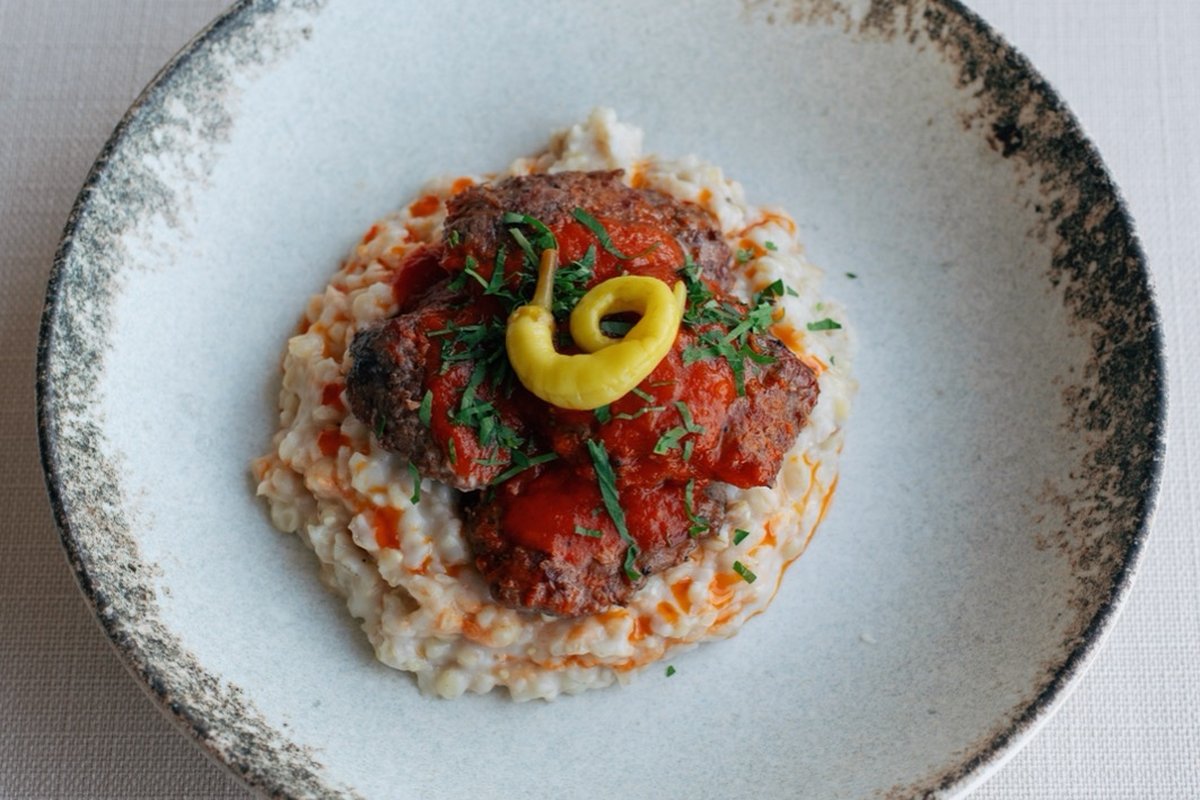
Two dishes in the grill section are not cooked on a skewer, but they belong to the same tradition. Hünkar beğendi, which translates as “the sultan liked it”, is chunks of beef simmered slowly in a tomato-based sauce and served on a bed of eggplant purée, which in the classic recipe is enriched with butter and cheese. Traditionally the eggplant is first charred over an open flame, which gives the purée its smoky taste. A popular story links the dish to a 19th-century visit by the French Empress Eugénie to the Ottoman court, though the recipe itself is older. Whatever the origin, it is one of the clearest examples of how palace cooks paired meat with vegetables. For more on that kitchen, read our piece on Ottoman palace cuisine in Sultanahmet.
Butcher’s meatballs are the humbler relative: grilled meatballs served on slow-cooked, milk-based keşkek, the creamy wheat dish that Anatolian villages still prepare for weddings and festivals. The combination of charred meat and soft, almost porridge-like wheat is very old and very satisfying, and it is a good way to taste keşkek if you have not tried it before.
If you are curious why some of these dishes count as palace food and others as village food, our article on the difference between Anatolian and Ottoman cuisine explains where the line falls.
How to Build a Kebab Dinner at Shyra
A Turkish kebab is rarely eaten on its own. The meal usually starts with a few cold mezes and something warm, moves to the grill, and ends with tea, coffee or a dessert. Here is a simple plan that works for two people:
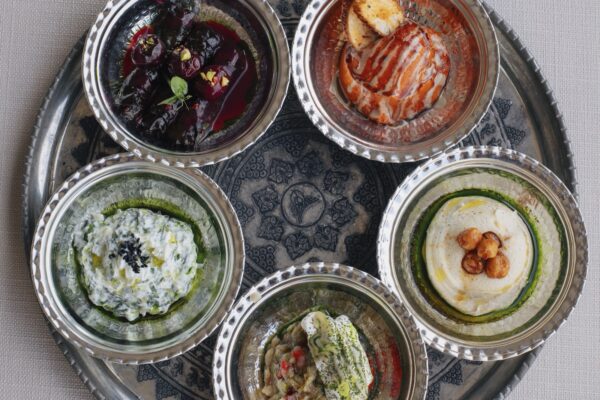
- Start light: two cold mezes, for example muhammara and the smoked eggplant meze, plus a salad such as the tabbouleh from Mersin. Mezes prepare the palate for the smoke and fat of the grill. Our guide to Turkish cuisine beyond kebabs covers the meze table in more depth.
- Share the grill: order two different kebabs instead of two of the same. Adana and pistachio kebab together show how much the same method can change with one ingredient; shashlik and lamb chops make a good pair for guests who prefer whole cuts.
- Add a grain: a pilaf on the side, either the bulgur and chickpea pilaf or the palace-style “iç pilav” with almonds and raisins.
- Choose the right drink: ayran, the salted yogurt drink, is the classic match for kebab; Adana şalgam, a tangy fermented turnip and carrot juice, is the local choice in the south-east; rakı is the traditional companion for a long dinner.
- Finish sweet: katmer or baklava from Gaziantep, followed by Turkish coffee.
If this is your first Turkish meal and you want a broader overview of what to order, start with our guide on what to order the first time you try Turkish food.
Kebab Etiquette and Small Tips
A few details make a kebab dinner better. Kebabs are cooked to order over charcoal, so they take a little time; this is why Turkish tables fill the wait with mezes. Minced kebabs should be eaten hot, as soon as they reach the table, while the fat is still soft. Tear the flatbread with your hands and use it to pick up meat, peppers and onions together. Squeeze the grilled pepper and tomato over the meat if you want extra juice. And if you are unsure about spice, ask for Urfa: it has all the smoke of Adana without the heat.
Kebab is also a dish for sharing. Turkish hospitality is built around the idea of a table where plates move between people, so do not hesitate to order several kebabs and pass them around. That is exactly how a kebab dinner is meant to be eaten.
Frequently Asked Questions
What is the difference between Adana kebab and Urfa kebab?
Both are hand-chopped minced kebabs grilled on a wide skewer. Adana kebab is spiced with red pepper flakes; Urfa kebab is made without the hot pepper and tastes milder.
Which kebab is best for someone who does not like spicy food?
Urfa kebab, shashlik kebab and the lamb chops are all mild. Pistachio kebab is also gentle, with a nutty flavour rather than heat.
Are the kebabs at Shyra cooked over charcoal?
Yes. The Adana and Urfa kebab is described on the menu as traditional charcoal-grilled kebab, and the grill section is built around open-fire cooking.
Is hünkar beğendi a kebab?
Strictly speaking it is a stew served on eggplant purée, but it sits in the grill section at Shyra because it comes from the same meat kitchen and is often ordered alongside kebabs.
Do I need a reservation for dinner?
Sultanahmet is busy in the evenings, especially in spring and autumn, so booking ahead is recommended. You can reserve a table on our reservation page.
A Kebab with a Hometown
The best way to understand Turkish kebab is to stop thinking of it as one dish. Adana and Urfa kebab tell the story of the south-east, pistachio kebab carries the flavour of Gaziantep, shashlik links Istanbul to the wider Turkic world, Thracian lamb chops come from just west of the city, and hünkar beğendi brings the palace kitchen into the same menu. Each kebab at Shyra has a hometown, and ordering two or three of them side by side is the easiest way to taste how varied this tradition really is. Come hungry, share your plates, and let the charcoal do the talking.