
Sultanahmet is one of the very few neighbourhoods in the world where the kitchen that once fed an empire is a ten minute walk from where you sit down to dinner. For almost four centuries the imperial kitchens of Topkapi cooked for thousands of people every single day, and the account books, recipe notes and banquet lists produced there still survive. Reading them is a strange experience: many of the dishes are recognisably Turkish, but the balance of flavours is not what a modern diner expects. Fruit sits beside lamb. Honey meets pepper. A melon is hollowed out and used as a cooking vessel. This is Ottoman palace cuisine, and three dishes from it are on the menu at Shyra Restaurant in Sultanahmet right now.
What Ottoman Palace Cuisine Actually Was
The word palace conjures images of extravagance, and the Ottoman palace kitchen certainly worked at an extraordinary scale. At its height the Matbah-i Amire, the imperial kitchen complex at Topkapi, employed well over a thousand people organised into specialist guilds: soup cooks, kebab cooks, pastry makers, halva makers, yoghurt makers, pickle makers and the confectioners who supplied the sultan personally. But scale is not the same thing as excess. What made palace cooking distinctive was discipline. Ingredients arrived from every province of a vast empire, and the palace cook was expected to know exactly which region a thing came from and what it was good for.
That is why palace recipes read like geography lessons. Rice for pilaf came from Egypt and later from Anatolia. Honey came from the Balkans. Clarified butter arrived from the eastern provinces. Goose and game were winter foods from the cold north east. The palace cook combined them according to a medical philosophy inherited from Islamic and Byzantine physicians, in which every food had a temperament and a good dish balanced those temperaments against each other. Sweetness balanced heat. Acidity cut fat. A meal was meant to leave the body in equilibrium, not merely full.
If you would like the longer story of how these flavours travelled to Anatolia in the first place, we wrote about it in the great migration behind Turkish cuisine.
Goose Kebab (1539): A Winter Dish from a Royal Banquet
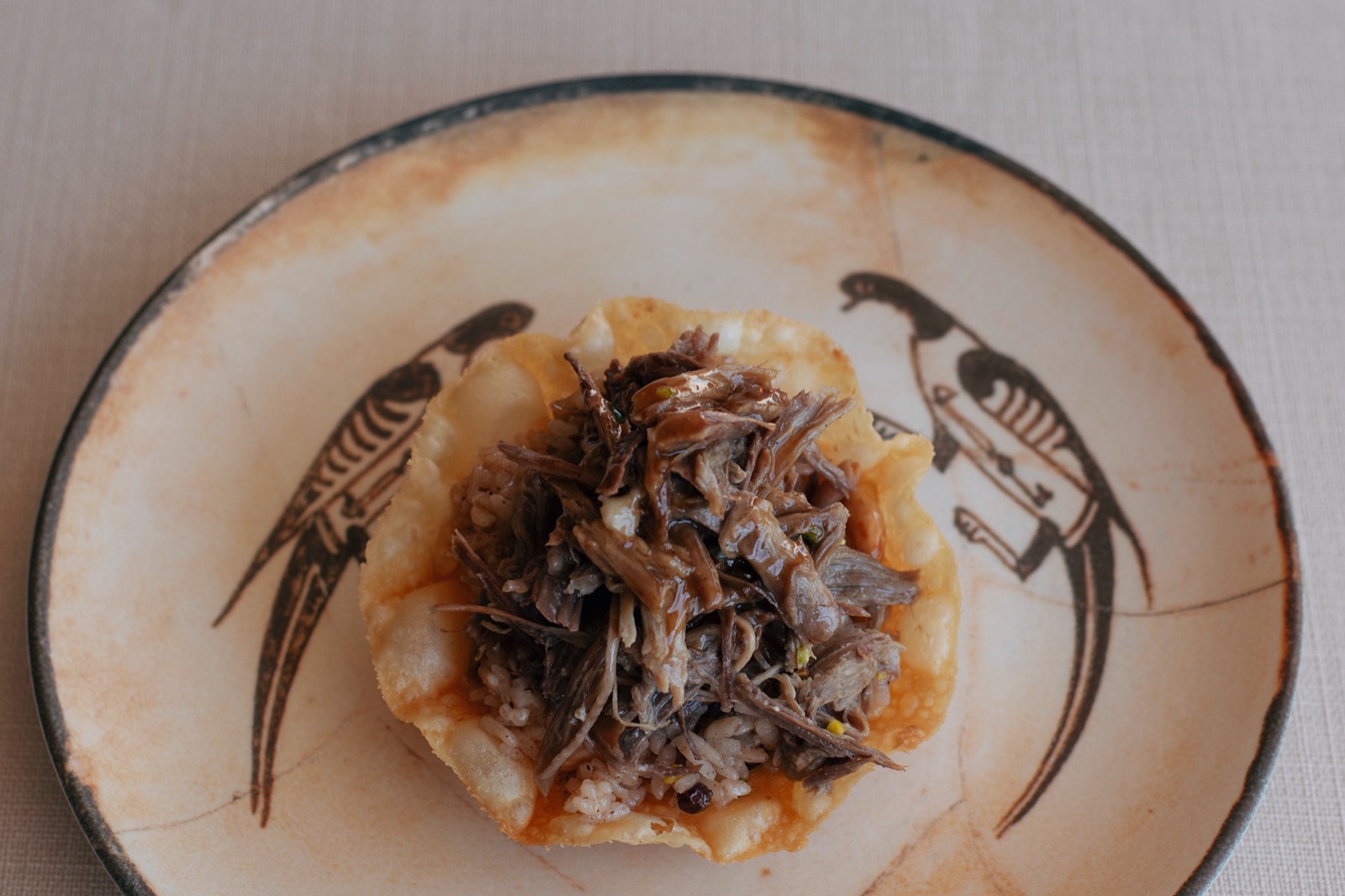
The date attached to this dish is not decoration. In 1539 Suleiman the Magnificent held a circumcision feast for his sons that lasted for days, and the surviving records of that banquet list goose among the poultry served to the highest tables. Goose was a winter luxury in the palace: fatty, rich, slow to cook and therefore expensive in labour as well as money. It suited the cold months, when the medical logic of the period called for warming, substantial food.
At Shyra the goose comes from Kars, the high plateau in the far north east of Turkiye where goose rearing is still a living tradition and where the birds are salted and air dried through the winter. The meat is cooked long and slow until it falls from the bone, then pulled and served over crisp layered pastry with rice and a sauce finished with mint. The pastry is not a modern flourish. Layering meat over thin dough was a standard palace technique for holding a rich sauce and giving the plate texture, and it is why so many Ottoman dishes sit somewhere between a stew and a pie.
Ordered on its own from the main courses, the goose kebab is the most direct route into palace cooking that the menu offers. It is also on the evening tasting menu, where it arrives after the meze course as the main event.
Stuffed Melon: Fruit as a Cooking Vessel
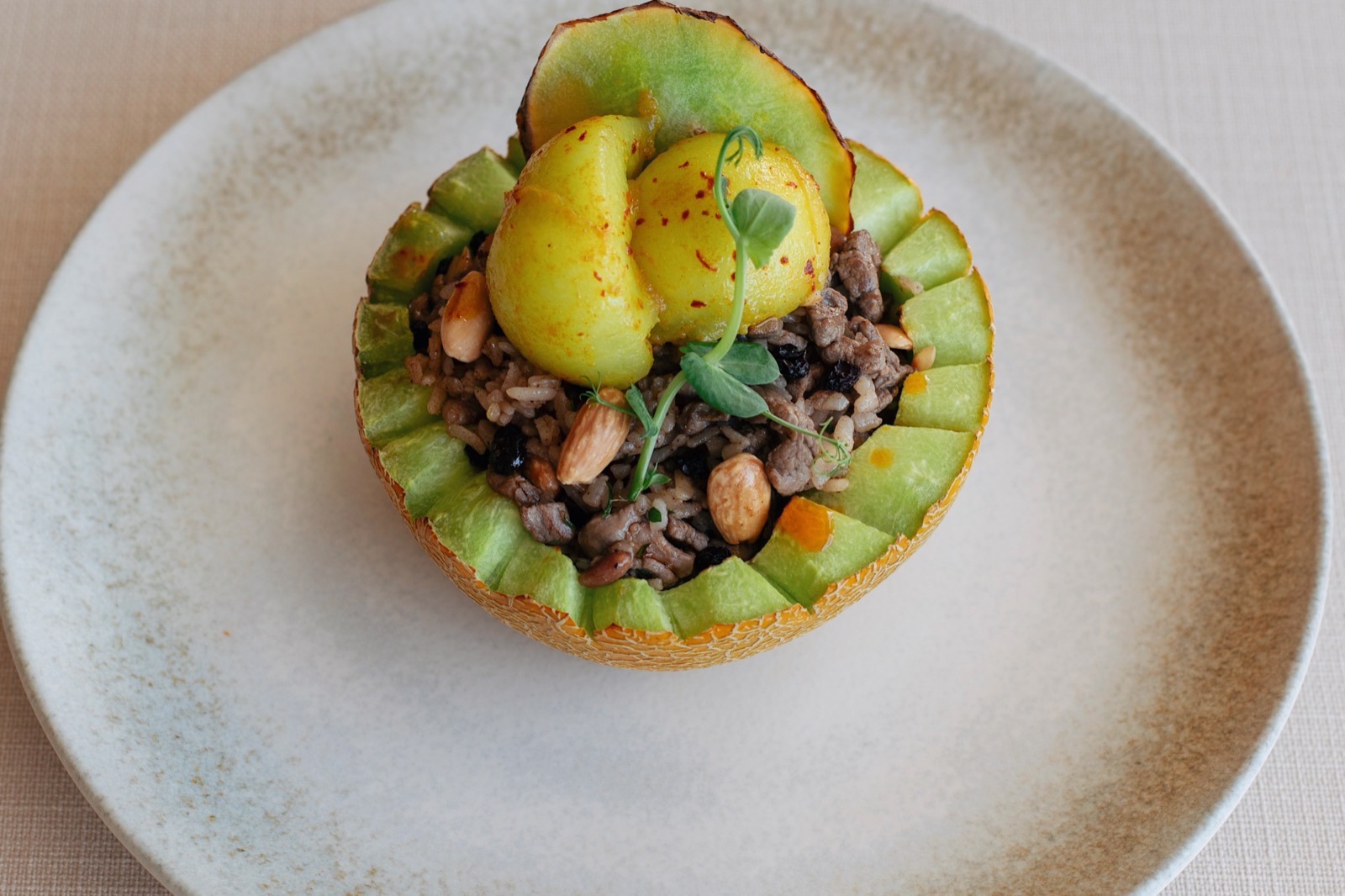
Of the three dishes here, stuffed melon is the one that most reliably stops a table mid conversation. A melon is hollowed out, filled with beef tenderloin, rice, dried fruit, pistachios and a warm spice blend, and then cooked so that the fruit softens and its juice runs back into the filling. It looks like a dessert and eats like a main course.
Stuffed vegetables and fruits were a signature of the palace repertoire because they demanded exactly the kind of labour the imperial kitchen could afford. Somebody had to hollow the fruit without splitting it, cook the filling to the right point separately, and judge the moment when the melon was tender but still standing. Court records list dolma made from quince, apple, aubergine and melon, and the sweetness of the shell was the point rather than an accident. It cut the fat of the meat and carried the spices.
Modern palates sometimes hesitate at the idea, which is a shame, because the balance is far gentler than it sounds. The melon reads as a background sweetness, closer to the way a good plum sauce works with duck than to anything sugary. If you are new to Turkish food and unsure where to begin, our guide on what to order on a first visit is a useful companion to this page.
Chicken Saute with Apricot and Eggplant Puree
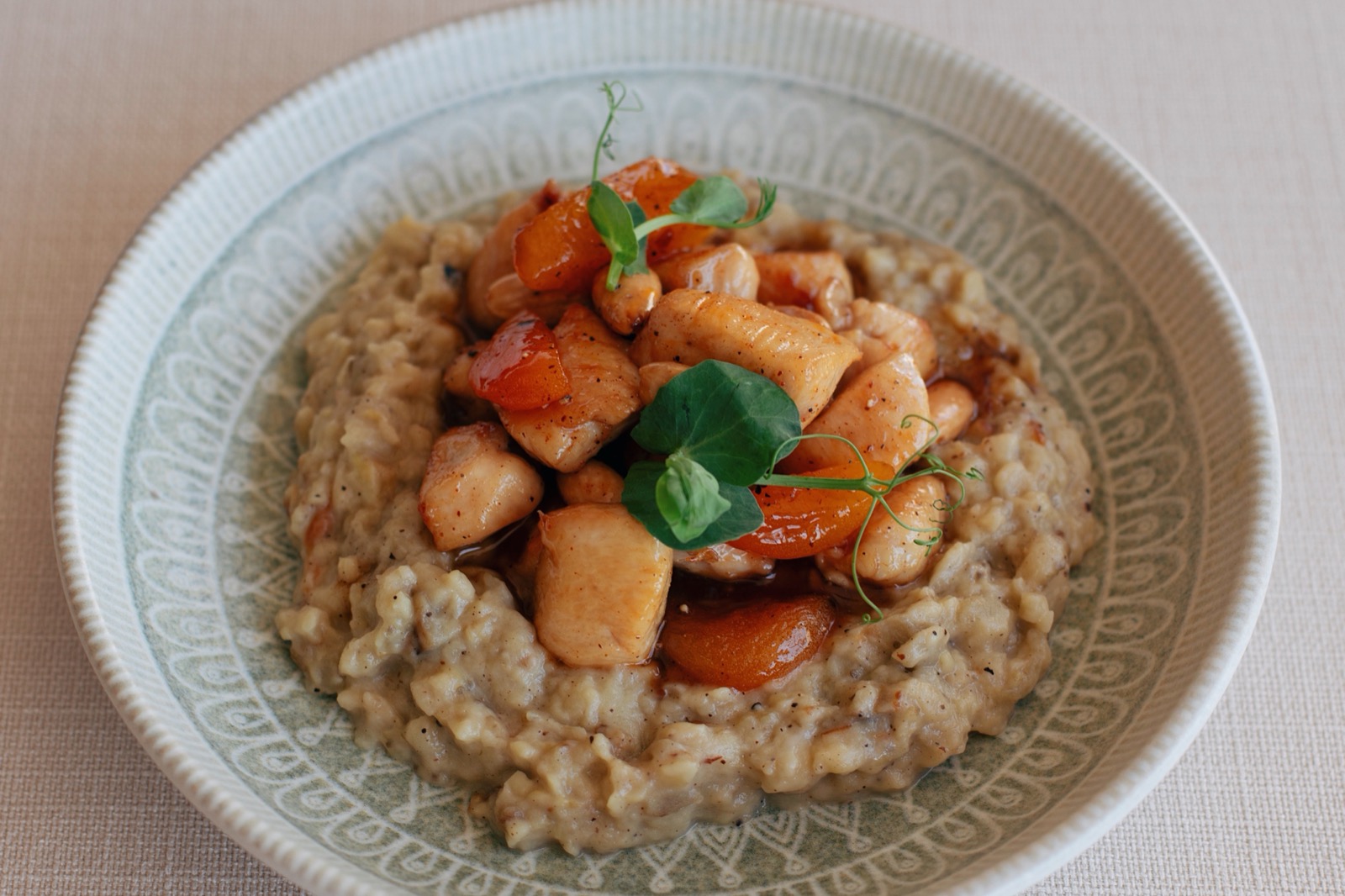
The third palace dish on the menu is the most approachable and, for many guests, the one they end up talking about on the way out. Chicken leg is cooked with apricot, honey and roasted almonds and served on a bed of smoked eggplant puree, finished with pomegranate seeds. Every element of it is documented in fifteenth and sixteenth century palace cooking: dried fruit as a souring and sweetening agent, nuts for texture and richness, honey rather than sugar, and smoked eggplant as the base that holds everything together.
Eggplant puree is the ancestor of what most people know today as begendi, the dish usually served under lamb. In palace kitchens the puree was a workhorse rather than a specialty, a neutral, smoky canvas that let a sauce show itself. Pairing it with poultry rather than red meat is closer to the older practice than the version most Istanbul restaurants serve now.
Because it is lighter than the goose and less theatrical than the melon, this is the dish we usually suggest to guests who want to try palace cooking without committing to a full tasting menu.
Why Sweet and Savoury Shared a Plate
The single hardest thing for a modern diner to accept about palace cuisine is the sweetness. We are used to a strict border between the savoury courses and the dessert, but that border is a relatively recent European invention that Turkish home cooking never fully adopted either. Look at any Anatolian table and you will still find pomegranate molasses on a salad, dried apricots in a lamb stew, and sugar in a tomato sauce.
In the palace this was systematic. Sweetness was one of the tools a cook used to place a dish on the medical spectrum, and it was also a display of wealth, since sugar and imported dried fruit were costly. A palace dish that combined meat, fruit and nuts was announcing something about the household that served it. Understanding that logic changes how the food tastes, which is really the argument we make in why every dish at Shyra tells a story.
The Palace Kitchen as an Institution
It helps to remember that the imperial kitchen was a bureaucracy as much as a kitchen. Supplies were requisitioned by written order, cooks were ranked and promoted, and the daily output was recorded. Because of that paperwork we know more about what the Ottoman palace ate in 1539 than about what most European courts ate in the same decade.
That archive is what makes a restaurant like this possible. A palace dish reconstructed from a banquet list is not an invention; it is a reading. Chef Necati Yilmaz works from those sources and from regional Anatolian practice at the same time, which is why the goose comes from Kars and the pistachios from Antep rather than from whatever is convenient. The route that brought this kitchen from Central Asia to Sultanahmet is set out in from the steppes to Sultanahmet.
How to Order Palace Cuisine Today
There are two sensible ways to approach the palace dishes on our menu. The first is a la carte: pick one palace main course, add a cold meze or two to start, and finish with a milk dessert. That keeps the meal to a comfortable length and lets the main dish stand out.
The second is the evening degustation menu, which walks through pomegranate sherbet, Konya okra soup, a selection of five mezes, keskek and the palace style goose before ending with kazandibi and Turkish coffee. It is the closest thing to a palace sequence rather than a palace plate, and it is the version we recommend for a first visit.
Frequently Asked Questions About Ottoman Palace Cuisine
Is palace cuisine very heavy? Richer than everyday Turkish home cooking, but not heavy in the way people expect. Portions in the palace were moderate and courses were sequenced deliberately, which is exactly how the tasting menu is built.
Is the goose kebab available all year? Goose is a winter bird by tradition, but the Kars supply chain now makes it a year round dish. Availability can still vary, so it is worth asking when you book.
Do the palace dishes suit children? The chicken with apricot usually works well. The stuffed melon divides opinion at any age.
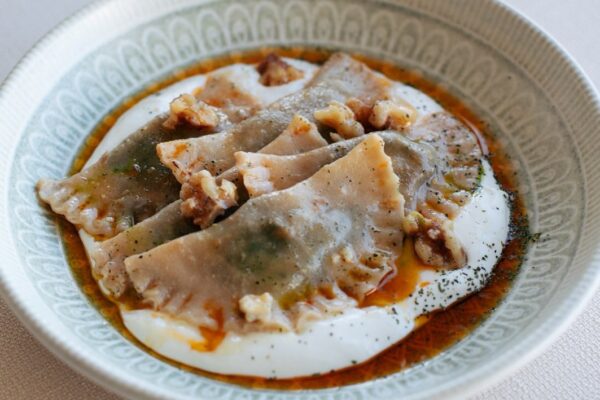
Are there vegetarian palace dishes? Yes. The menu carries Ottoman style dumplings with spinach and tulum cheese and a stuffed vegetable course, both drawn from the same tradition.
How far in advance should I book? For weekend evenings and for the tasting menu, a few days is sensible.
A Palace Table in Sultanahmet
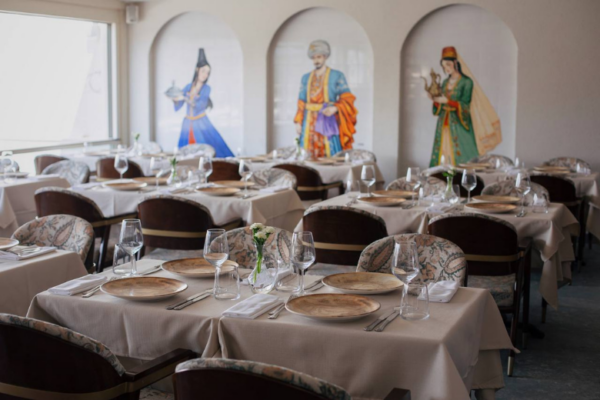
Standing in Binbirdirek, you are a few hundred metres from the walls behind which all of this was written down. That proximity is not a marketing line; it is the reason a restaurant in this particular square has an obligation to take the sources seriously. Goose kebab dated to 1539, a melon used as a cooking pot, chicken with apricot over smoked eggplant: three dishes, three documents, one kitchen.
If you would like to taste the palace repertoire in the neighbourhood where it was recorded, you can reserve a table at Shyra Restaurant and tell us on arrival that you want to eat the way the palace did.