
Turkish culinary migration is the story of a people who carried their traditions across mountains, steppes, cities, and empires before making Anatolia their homeland. Long before Turkish cuisine reached the refined tables of Istanbul, its foundations were being shaped on the vast plains of Central Asia, where food was inseparable from movement, survival, hospitality, and community.
Turkish culinary migration did not follow a single road, nor did it happen within a single generation. It unfolded across centuries. As Turkic communities moved westward, they encountered different peoples, climates, ingredients, agricultural traditions, and cooking techniques. They influenced the cultures they met and were influenced in return. By the time Anatolia became their permanent homeland, they carried with them not a fixed collection of recipes, but an extraordinary culinary memory ready to grow in new soil.
Where Did the Turkish Migration Begin?
The earliest chapters of this long journey lead us to the great steppes of Central Asia. Life there was shaped by immense distances, changing seasons, livestock, mobility, and the need to preserve food for long journeys. The table naturally reflected the conditions of the land.
Meat and dairy products held an important place in this world. Milk could be transformed into products that lasted longer, while meat could be cooked, dried, or preserved. Grains also became part of everyday nourishment. Food needed to be practical enough for a mobile society, yet sharing a meal carried a significance far greater than simple nutrition.
The table was a place where guests were welcomed, families gathered, and social bonds were strengthened. Hospitality, which remains one of the most recognizable characteristics of Turkish food culture today, has roots reaching deep into this early world.
The journey that would eventually lead toward Anatolia therefore began with more than ingredients. The travelers carried methods, habits, memories, rituals, and an understanding of what it meant to gather around food.
The Westward Journey Changed the Turkish Table
As Turkic peoples moved west from Central Asia over the centuries, the landscape changed around them. Steppe gave way to fertile valleys, mountain passes, cultivated plains, ancient settlements, and busy trade routes. With every new geography came new possibilities.
This was one of the great forces behind the evolution of Turkish food culture. A cuisine born under the conditions of the steppe encountered agricultural societies with their own sophisticated traditions. New vegetables, fruits, spices, grains, herbs, cooking vessels, and techniques entered the culinary vocabulary.
Yet this was not a simple process in which one cuisine disappeared and another replaced it. Cultural exchange moved in both directions. Turkic communities preserved important elements of their own traditions while absorbing knowledge from the societies they encountered. At the same time, their customs and techniques became part of the cultures around them.
The road itself became a kind of kitchen.
Across generations, recipes changed. Techniques evolved. Ingredients that had once been unfamiliar became indispensable. The cuisine expanded without completely losing the memory of where it had begun.
A Culinary Culture Shaped by Encounters
To understand Turkish cuisine, it is important to understand this constant interaction. The migration routes connecting Central Asia with the lands farther west passed through regions shaped by Persian, Middle Eastern, Caucasian, and other culinary traditions. Trade routes carried not only goods but ideas, tastes, and techniques.
Spices traveled. Fruits traveled. Grains traveled. Methods of preparing meat, dough, rice, vegetables, and sweets traveled with them.
A culinary culture gradually emerged that could absorb new influences without becoming a simple copy of another cuisine. This ability to reinterpret what was encountered would become one of the defining characteristics of Turkish gastronomy.
It also helps explain why modern Turkish cuisine can feel simultaneously familiar and surprising. Certain ingredients connect it to neighboring culinary traditions, yet the combinations, techniques, regional interpretations, and traditions surrounding the table give it a distinctive identity.
Anatolia Became More Than a Destination
Eventually, the long westward movement brought Turkish communities into Anatolia. From the medieval period onward, and particularly with the establishment of Turkish states in the region, Anatolia increasingly became a permanent homeland rather than another stage along the migration route.
This changed everything.
Anatolia was extraordinarily rich in geography and agricultural diversity. Its central plains, Aegean coastline, Mediterranean climate, eastern highlands, Black Sea valleys, southeastern lands, lakes, forests, and fertile river basins offered ingredients and possibilities that differed dramatically from one region to another.
The culinary knowledge carried from Central Asia now encountered the immense food heritage already present in Anatolia. Over centuries, Turkish communities developed regional food traditions around the ingredients available to them and the cultures with which they lived, traded, and interacted.
The result was not one uniform cuisine. It was a culinary mosaic.
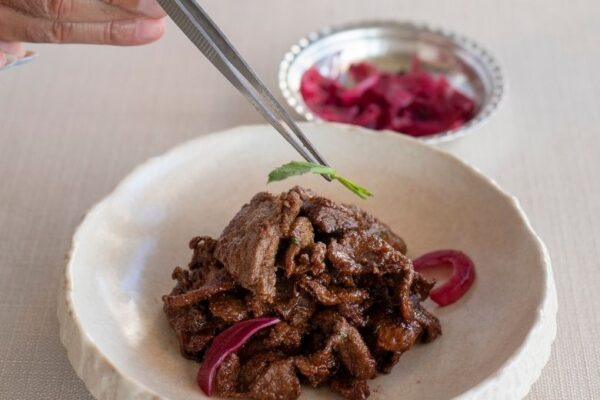
Central Anatolia developed its own relationship with grains, dough, meat, legumes, and slow cooking. The Aegean embraced herbs, vegetables, seafood, and olive oil. Southeastern Anatolia became renowned for spices, nuts, grains, meat, and powerful combinations of sweet, sour, and savory flavors. Eastern Anatolia reflected its climate and pastoral traditions, while the Black Sea created another distinctive culinary vocabulary around its local produce and maritime environment.
These traditions were different, but they increasingly belonged to the same larger story: the cuisine of Anatolia shaped and carried forward by generations who had made this land their home.
How Did Migration Shape Anatolian Cuisine?
Migration gave Anatolian cuisine one of its most important qualities: adaptability. The culinary traditions brought westward did not remain frozen in time. They encountered new ingredients and learned to speak the language of a new geography.
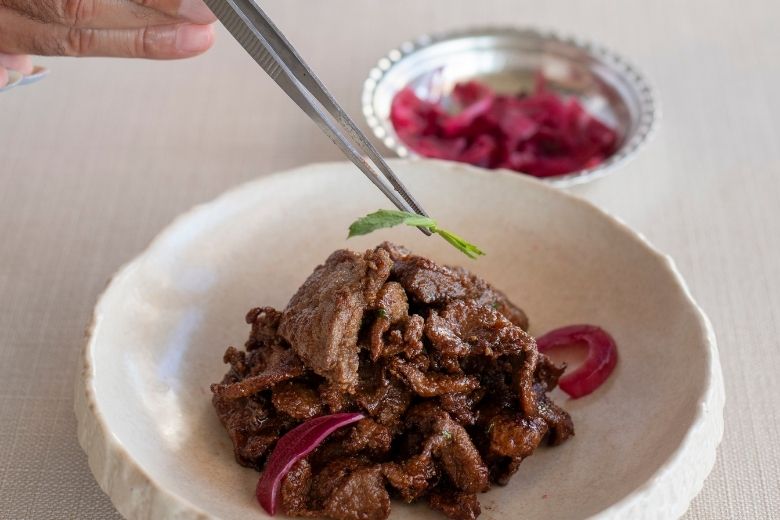
Meat traditions met Anatolia’s vegetables and herbs. Grain culture expanded through regional breads, pastries, soups, and dishes. Dairy remained important but appeared in increasingly diverse forms. Fruits could become part of savory preparations. Nuts, spices, olive oil, legumes, and regional produce expanded the possibilities of the table.
Perhaps most importantly, the Turkish table became a meeting place where influences could be absorbed and transformed over generations.
This is why asking who contributed a single ingredient or technique can sometimes tell only a small part of the story. Anatolian cuisine was formed through centuries of coexistence, adaptation, exchange, and reinterpretation. The Turkish culinary tradition that emerged from this process became one of the principal ways this accumulated heritage was preserved and transmitted from one generation to another.
From Anatolian Hearths to Seljuk Tables
The Seljuk period represents an important stage in this transformation. With Turkish political and cultural life becoming deeply rooted in Anatolia, older Central Asian traditions increasingly interacted with the ingredients and established foodways of the new homeland.
Food remained closely tied to hospitality, generosity, and social life. The hearth was not merely a place for cooking. It was a center of family and community. Feeding a traveler or welcoming a guest carried moral and cultural meaning.
At the same time, urban life, trade, agriculture, and regional specialization allowed food culture to become increasingly varied. What had begun on the steppe was now becoming unmistakably Anatolian.
This transformation is essential to understanding the larger culinary journey from the Central Asian steppes to Sultanahmet. Turkish cuisine was never created at a single moment. It accumulated layer after layer as history moved forward.
The Ottoman Palace Gathered the Flavors of a Vast Geography
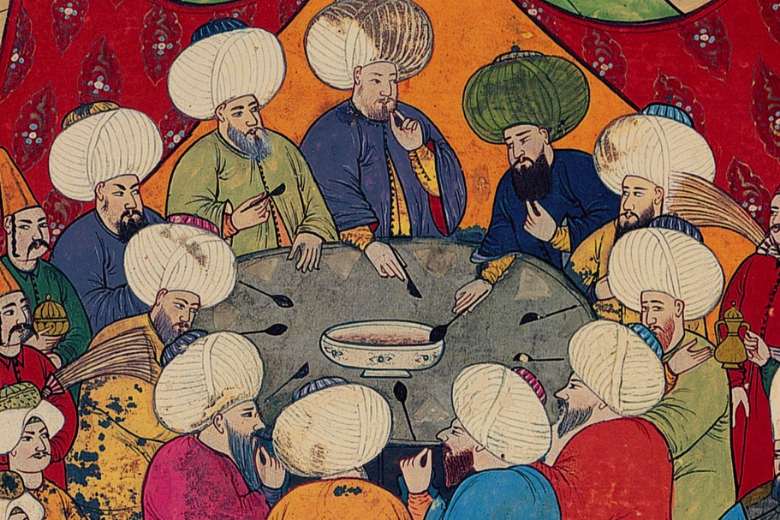
Centuries later, the rise of the Ottoman Empire opened another extraordinary chapter. Anatolian culinary traditions entered into conversation with an even wider geography extending across the Balkans, the Mediterranean, the Middle East, the Caucasus, and beyond.
Istanbul became the imperial capital, and the palace kitchens became a remarkable center of culinary organization and refinement. Ingredients arrived from different regions. Skilled cooks developed specialties. Recipes were adapted, classified, refined, and prepared for different occasions.
The sophistication of palace cuisine did not mean abandoning the traditions of Anatolia. On the contrary, many of those traditions formed part of its foundation. Regional knowledge could enter the capital, take on new forms, and circulate again through the wider culinary culture.
The palace therefore became another great crossroads in a journey that had already lasted centuries.
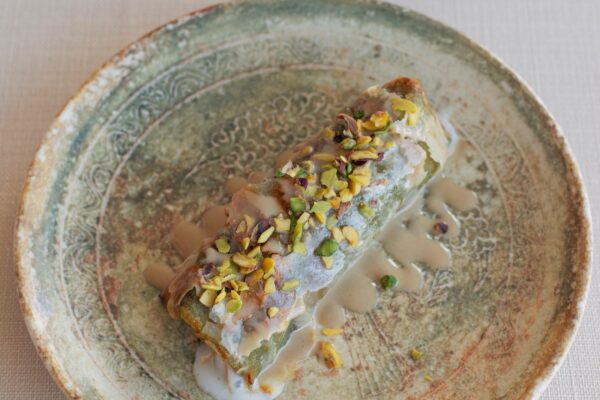
Simple ingredients could acquire extraordinary complexity. Fruits could accompany savory dishes. Nuts and spices could create layers of aroma. Soups could become refined expressions of familiar staples. Stuffed vegetables and leaves could balance sweetness, acidity, fragrance, and texture. The table became both an expression of abundance and a demonstration of culinary craftsmanship.
From the Steppe to the Palace
Imagine the distance contained within a single table.
Behind it lie the winds of Central Asian grasslands, long migration routes toward the west, encounters with unfamiliar lands, the establishment of new homes, the markets of Anatolian cities, Seljuk hearths, regional kitchens, caravan routes, and finally the elaborate kitchens of an imperial capital.
What makes this story extraordinary is that one chapter did not completely erase the previous one.
Traces remained.
The importance of meat and dairy survived in new forms. Grain traditions multiplied. The culture of preservation continued. Hospitality remained central. Meanwhile, Anatolia added herbs, vegetables, fruits, olive oil, regional spices, seafood, nuts, and countless local ingredients to the repertoire.
By the Ottoman period, centuries of movement had created a culinary language capable of being both humble and ceremonial, regional and imperial, simple and extraordinarily refined.
Turkish Cuisine Is a Living Memory of Migration
This is why Turkish cuisine cannot be reduced to a handful of famous dishes. Kebabs, stuffed vegetables, soups, mezze, pastries, seafood, yogurt-based preparations, rice dishes, vegetable recipes, desserts, and palace specialties all belong to different parts of a much larger cultural landscape.
Even the act of placing several dishes at the center of the table carries meaning. Sharing food is a continuation of an ancient understanding of hospitality. Serving a guest generously is not merely restaurant etiquette; it echoes a social value carried across generations.
Recipes changed because the people carrying them changed. Landscapes changed. Cities changed. Empires rose and disappeared. Yet the table continued to preserve fragments of what came before.
That is why the stories carried by traditional Turkish dishes can reveal much more than ingredients and cooking techniques. Food can preserve geography, migration, memory, adaptation, and identity in ways that written history sometimes cannot.
Why Is Anatolian Cuisine So Diverse?
Anatolian cuisine is diverse because Anatolia itself is diverse. Few regions bring together such dramatically different climates, agricultural traditions, landscapes, historical routes, and cultural encounters within the same geography.
A dish from Konya does not need to resemble a dish from the Aegean coast. A recipe from Gaziantep may rely on completely different ingredients and techniques from one associated with the Black Sea or Eastern Anatolia. Yet each can belong to the broader heritage of Turkish cuisine.
This regional richness is not a contradiction. It is the natural result of centuries of adaptation.
Turks arrived in Anatolia carrying culinary traditions formed through a long migration. Once here, they did what they had done throughout that journey: they learned from the land, interacted with the cultures around them, adapted what they encountered, and created new expressions of their own food culture.
Generation after generation then preserved, changed, and transmitted those traditions. The Anatolian table we recognize today is the result of that long historical accumulation.
Can You Still Taste the Migration Story Today?
Yes, but not because modern dishes are unchanged relics from a distant past. Culinary heritage survives precisely because it evolves.
A living cuisine is passed from one generation to another. Ingredients change. Techniques improve. Presentation develops. Regional interpretations emerge. Yet recognizable ideas remain: hospitality, sharing, respect for ingredients, patient preparation, balance, and the ability to bring different culinary influences together.
These ideas are still visible across Turkish tables today.
They can be found in a slowly prepared regional soup, in vegetables transformed by fire, in yogurt accompanying savory flavors, in nuts and fruits appearing where a first-time visitor might not expect them, or in a recipe whose origins connect a modern Istanbul dining room to a distant Anatolian city.
The migration route therefore did not end when Turks reached Anatolia. In another sense, it continues every time this culinary heritage is interpreted and passed forward.
Shyra Brings the Migration Story to the Table
In Sultanahmet, surrounded by monuments that witnessed some of the most important chapters of Istanbul’s history, Shyra Restaurant approaches this culinary inheritance as a story worth preserving and experiencing.
Its philosophy follows the same route: from the steppe to Anatolia, from regional kitchens to the palace, and from centuries-old culinary memory to the contemporary table.
The objective is not to turn history into a museum piece. Food must remain alive. It must still create pleasure, conversation, curiosity, and a desire to share. Shyra therefore interprets this heritage through a modern restaurant experience while allowing the cultural identity behind the dishes to remain visible.
Regional inspirations, Anatolian ingredients, traditional techniques, palace influences, and contemporary presentation meet on the same table. Guests who want to understand the broader concept can explore the Shyra Restaurant dining experience in Sultanahmet before planning their visit.
The Journey Ends at a Table in Sultanahmet

Thousands of kilometers. Countless encounters. New landscapes, new ingredients, new techniques, new homes.
The story began beneath the enormous sky of Central Asia. It crossed the routes of civilizations, reached Anatolia, took root in a new homeland, matured through regional kitchens, and gained another layer of refinement in the Ottoman palace.
Centuries later, the journey can still be traced through taste.
At Shyra Restaurant, that heritage is invited back to the table—not as a distant memory, but as something alive. A meal becomes an opportunity to follow the road through its flavors, to discover how geography transformed tradition, and to experience how generations carried a culinary identity forward.
If Istanbul is one of the final great stages of this historic journey, Sultanahmet is a fitting place to encounter its legacy. Come to the table with curiosity, share the dishes before you, and discover the traces of a culinary migration that began on the steppes and found a lasting home in Anatolia.
Shyra Restaurant
Address: Binbirdirek Mah. Binbirdirek Meydanı Sok., No:3
34122 Fatih / İstanbul
Phone: +90 501 605 52 52
Email: [email protected]
To experience the traces of this centuries-long culinary journey for yourself, reserve your table at Shyra Restaurant and discover how the road from the Central Asian steppes to Anatolia can still be tasted in the heart of Istanbul.